There’s nothing quite like stepping into a cold shower on a winter morning because the geyser decided to stop working overnight. Most water heater problems have identifiable causes though, and quite a few are fixable without an emergency service call.
I’ve dealt with three different geyser issues over the years in different homes, and honestly, half of them turned out to be something simple I could’ve fixed myself if I’d known what to check.
Common Signs Something’s Wrong
Water heaters usually give warning signs before failing completely — inconsistent temperature, strange noises, or discolored water are all worth paying attention to rather than ignoring.
Quick answer: Common water heater problems include no hot water, inconsistent temperature, strange noises, and leaks — most stem from sediment buildup, a faulty heating element, or thermostat issues.
Problem 1: No Hot Water at All
This is usually either a power supply issue or a completely failed heating element. Check the power connection and circuit breaker first — it sounds obvious, but it’s the most commonly overlooked cause.
If power is fine, the heating element itself may have burned out, which typically needs professional replacement.
Problem 2: Water Isn’t Hot Enough
Often this comes down to thermostat settings being too low, or sediment buildup insulating the heating element from the water it’s supposed to heat.
- Check and adjust the thermostat setting first
- If that doesn’t help, sediment buildup is the likely culprit
- Flushing the tank (draining and refilling) often restores proper heating
[link to related guide about unclogging drains here]
Problem 3: Strange Noises From the Tank
Popping, rumbling, or knocking sounds usually indicate sediment buildup at the bottom of the tank. As water heats through the sediment layer, it creates these noises — annoying, but not immediately dangerous.
Regular flushing (every 6-12 months depending on water hardness) prevents this from becoming a bigger issue.
Problem 4: Water Heater Is Leaking
Leaks need attention immediately, since they’re both a safety hazard and a sign of internal damage. Check these locations first:
Related reading: How to Unclog a Drain Without Calling a Plumber
- Pressure relief valve — often the source of minor leaks, sometimes just needs replacement
- Tank itself — if the tank is leaking, it usually means internal corrosion and replacement is likely needed
- Connections and fittings — sometimes just need tightening
Problem 5: Discolored or Smelly Water
Rusty water suggests corrosion inside an older tank; a sulfur or rotten-egg smell usually points to bacteria in the tank, particularly in units that haven’t been used for a while.
Quick answer: Discolored water usually indicates tank corrosion, while smelly water is typically caused by bacterial growth — both are addressed through tank flushing or, in severe cases, replacement.
Sediment Buildup: The Root of Many Problems
Hard water areas see faster sediment accumulation, and this single issue causes a surprising number of the problems on this list — noise, inefficiency, uneven heating, even shortened tank lifespan.
[link to related guide about winter home maintenance here]
When to Call a Professional vs DIY
- Thermostat adjustment: DIY, completely safe
- Tank flushing: DIY-able with basic instructions, though take care with hot water
- Heating element replacement: requires an electrician or plumber familiar with the wiring involved
- Tank leaks or corrosion: professional assessment needed, often signals replacement time
How Long Should a Water Heater Actually Last
Most tank-style water heaters last 8-12 years with reasonable maintenance. Beyond that, repairs become less cost-effective compared to simply replacing the unit.
FAQs
Why does my water heater make noise when heating? Sediment buildup at the tank’s bottom is the most common cause — regular flushing usually resolves it.
How often should I flush my water heater? Every 6-12 months, more frequently in areas with hard water, to prevent sediment-related issues.
Is a leaking water heater dangerous? Yes, it should be addressed immediately — both for water damage risk and potential internal tank failure.
Can I fix a water heater myself? Basic maintenance like flushing and thermostat adjustment is DIY-friendly; electrical or tank issues need a professional.
How do I know if I need a new water heater instead of a repair? If the unit is over 10 years old and showing multiple issues, replacement is usually more cost-effective than continued repairs.
Conclusion
Most water heater issues give warning signs before they become full emergencies — strange noises, inconsistent temperature, discolored water. Catching these early with basic troubleshooting saves you both money and the discomfort of an unexpected cold shower. If your unit is aging and problems keep stacking up, it might genuinely be time to consider replacement rather than repeated repairs.
Suggested Alt Text:
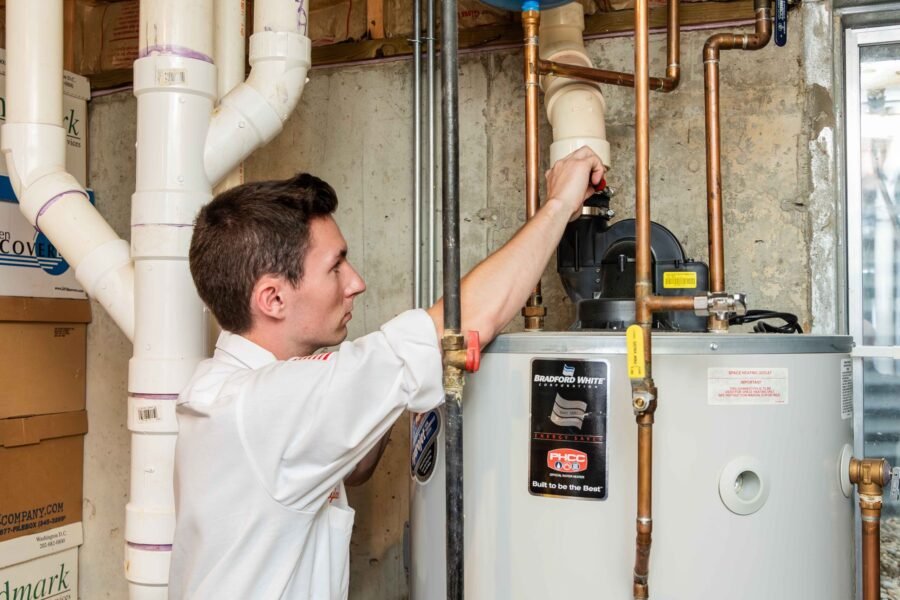
- “Water heater tank with visible pressure relief valve”
- “Homeowner checking water heater thermostat settings”
- “Technician flushing sediment from a water heater tank”