The moment a baby starts crawling, every room in your house suddenly looks like a hazard zone. Childproofing your home properly means going room by room, because generic checklists miss the specific dangers each space actually has.
I remember baby-proofing our living room thoroughly and completely forgetting the bathroom until my toddler figured out how to open the cabinet under the sink. Lesson learned the hard way.
Why a Generic Checklist Isn’t Enough
Every room has different risks — sharp furniture corners in the living room, cleaning chemicals in the kitchen, water hazards in the bathroom. Treating them the same way misses the details that actually matter.
Quick answer: Effective childproofing requires room-specific measures — securing furniture in living areas, locking cabinets in kitchens and bathrooms, and covering electrical outlets throughout the entire house.
Living Room
Corner guards on coffee tables and sharp furniture edges are the most obvious fix, but don’t stop there. Anchor tall bookshelves and TV units to the wall — tip-over accidents are more common than most parents realize, and genuinely dangerous.
- Corner and edge guards on furniture
- Furniture anchoring straps for bookshelves and TV units
- Cord management for blinds and electronics, kept well out of reach
Kitchen
This is where the most dangerous items in the house live — knives, cleaning chemicals, and hot surfaces. Cabinet locks aren’t optional here.
- Lock cabinets storing cleaning supplies and sharp objects
- Use back burners when cooking, and turn pot handles inward
- Store knives and glassware in high, locked cabinets
- Keep trash cans in cabinets with child-locks, not freestanding
[link to related guide about kitchen renovation ideas here]
Bathroom
Water, medications, and hard surfaces make bathrooms genuinely risky. Toilet locks prevent both drowning risk in young toddlers and general mess.
- Lock medicine cabinets, always, no exceptions
- Install non-slip mats in the tub and on the floor
- Use toilet lid locks for children under 3
- Keep hair dryers and styling tools unplugged and stored away
Bedroom
Crib safety standards matter more than people think — no loose bedding, no pillows for infants under a year, and crib rails at the correct height as the child grows.
Quick answer: Bedroom childproofing centers on crib safety, securing dressers to walls, and keeping cords from blinds or lamps completely out of reach.
Related reading: Smart Doorbell Cameras: Do They Really Prevent Break-Ins?
Staircases and Hallways
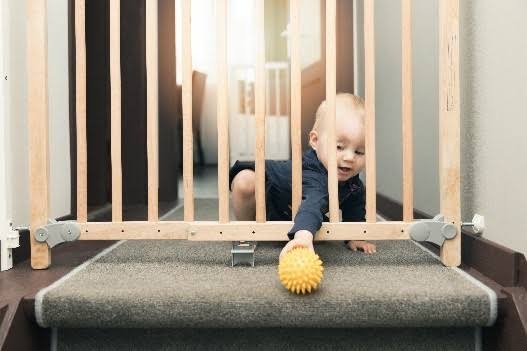
Baby gates at both the top and bottom of any staircase are non-negotiable once a child starts crawling. Hardware-mounted gates are more secure than pressure-mounted ones, especially at the top of stairs.
Outdoor Areas and Balconies
Balcony railings need to be checked for gaps — anything a child’s head could fit through is a genuine risk. Pool or water tank areas, if present, need locked access separate from the main house.
[link to related guide about smart doorbell security here]
A Room-by-Room Priority List
If you’re starting from scratch and need to prioritize:
- Staircase gates — immediate priority once crawling starts
- Kitchen cabinet locks — chemicals and knives are the biggest risk
- Bathroom medicine cabinet locks
- Furniture anchoring in living areas and bedrooms
- Outlet covers throughout the house
- Balcony and outdoor access points
FAQs
At what age should I start childproofing my home? Start before your child begins crawling, usually around 5-6 months, since mobility develops faster than most parents expect.
What’s the most commonly overlooked childproofing area? Bathroom cabinets and staircase gates — both are frequently added later than they should be.
Do I need to anchor all furniture, or just tall pieces? Focus on anything a child could climb or that could tip over — bookshelves, dressers, and TV units are the highest priority.
Are pressure-mounted baby gates safe for stairs? Only at the bottom of stairs; top-of-stair gates should always be hardware-mounted for safety.
How much does full home childproofing typically cost? Basic childproofing (outlet covers, cabinet locks, corner guards) usually costs ₹3,000-8,000 for a full home.
Conclusion
Childproofing your home properly takes more than a generic checklist — it needs a room-by-room look at what’s actually dangerous in each space. Walk through your house at your child’s eye level this week; you’ll spot hazards you never noticed standing at your own height. It’s a small effort that prevents the accidents that matter most.
Suggested Alt Text:
- “Childproof cabinet lock installed under kitchen sink”
- “Baby gate installed at the top of a staircase”
- “Corner guards applied to a living room coffee table”